






Cover systems for land regeneration - thickness of cover systems for contaminated land (BR465)
BRE (Building Research Establishment) is an independent, research-based consultancy, testing and training organisation, operating in the built environment and associated industries.
On 22 March 2004, BRE published; Cover systems for land regeneration - thickness of cover systems for contaminated land (BR465), written by P Tedd, P Witherington, D Earle, S Hollingsworth, B Furlong, L Bradley, H Mallett and D Laidler. It was prepared by RSK ENSR Ltd on behalf of the Association of Geotechnical and Geo-environmental Specialists (AGS) in partnership with BRE.
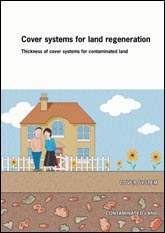
Cover systems can reduce the risk to human health posed by contaminated land and provide a medium for plant growth. However, poor design can result in unnecessarily thick, or inadequate cover.
BR465 can be used to help assess the need for cover systems and to determine their thickness. It is intended for simple cover systems on brownfield sites where exposure to contamination needs to be reduced. It is not appropriate for sites where exposure to contamination must be completely prevented.
The booklet comes with a CD ROM which includes:
- A powerpoint presentation setting the scene and introducing the study that led to the development of the methodology.
- A report detailing; the findings of an in-depth study of design approaches, a literature review and on-site research; proposing a simple method for designing cover thickness, a more rigorous spreadsheet-based method and a worked example.
- A spreadsheet enabling the design of combinations of cover thickness and ground contamination for a wide range of contaminants.
[edit] Find out more
[edit] Related articles on Designing Buildings Wiki
- Approved Document C.
- BRE articles on Designing Buildings Wiki.
- BRE Buzz articles on Designing Buildings Wiki.
- Brownfield land.
- Building on fill.
- Building Research Establishment BRE
- Contaminated land.
- Environmental engineering.
- Ground conditions.
- Ground investigation.
- Hydraulically treated soils in residential construction (BR 513).
- Landfill tax.
- Methane and other gasses from the ground.
- Pollution.
- Pre construction information.
- Radon.
- Radon: Guidance on protective measures for new buildings BR 211.
- Settlement.
- Site appraisal.
- Soil survey.
- Solid and liquid contaminants risk assessments.
Featured articles
Check out some of the best features and news from Designing Buildings as well as key stories from around the web.
Leaders in Learning for Practice Network

Call for conservation leaders in learning to register interest in new network.
The importance of early engagement

Construction lessons from the Trillium HealthWorks Experience Centre.
Mayors are to be given planning call in powers

Mayors across England will be able to make the most important planning decisions.

The Master Builder: William Butterfield and his times. Book review.

Why construction can't afford to ignore the skills gap.
Building Safety Regulator, 19 August

Gill Kernick appointed Independent Chair of Residents’ Panel.
Connecting knowledge, technology and conservation
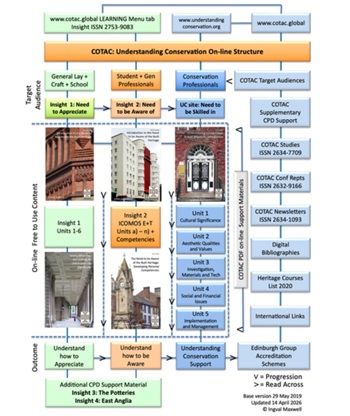
Building competence for the future of built heritage.
Building Regulations and Building Safety Act
CIOB publishes free advice for non-domestic clients.

Building Safety Newsletter from MHCLG.
An extraordinary record of steel engineering worldwide.

Households living near new pylons to save on bills.

ECA warns growth must not outpace grid capacity or skills.